
ROB KEY
Rob Key, born in 1979, is a natural sportsman whose mother played cricket at county level and who himself was an accomplished hockey player. He first came to our attention when he was picked by England at Under-19 level, and then when in his first season of first team cricket for Kent, he played a one day game against the South Africans, and jumped out to drive the fearsome Allan Donald three times in his innings of 54. The KCCC annual described him then as ‘a fearless youngster and a player of great potential.’
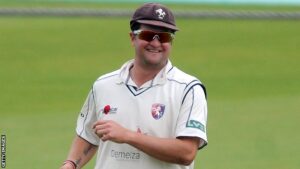
Rob Key in captaincy mode
In that 1998 season, Kent batsmen scored only 10 first-class hundreds between them, of which six were made by the great West Indian Carl Hooper. Key, with two, came next, with one each for Mark Ealham and David Fulton. This was to be Carl Hooper’s final season with Kent: he ended with a batting average above 50, easily the highest average of anybody who played more than 50 times for the club. He had the added distinction of becoming in 1992, one of only three batters who had ever cleared the St Lawrence lime tree. He was not easily replaced.
Key’s arrival coincided with the appointment of Matthew Fleming as captain in place of Steve Marsh, and also with the retirement of Graham Cowdrey, to end 48 consecutive seasons in which a Cowdrey had been a significant part of the county side. Not until Fabian Cowdrey made his debut in 2012 did the Cowdrey name appear on a Kent teamsheet. We still await the next generation.
From 2000, the county championship was divided into two divisions, and Kent, having come 5th in 1999, were in Division One. We stayed there for nine seasons, though never finished higher than second place, which we managed in 2004, behind Warwickshire. This was despite collecting fewer batting points than any other team in the division that year, a problem that has dogged Kent batting line-ups to this day. One could not blame Rob Key for this, as he finished top of the averages, and three other men scored more than 1000 runs that year – David Fulton, Matt Walker and Ed Smith.
In 2005, Kent made one of its most successful and popular signings of the century. David Fulton, then captain of Kent, had noticed Darren Stevens playing for Leicestershire, and thought there was something about him that Kent needed. He recommended him to the club, and Stevo was duly signed. Despite that fact that he was already 29 years old and had had a very modest seven seasons at Leicester, Stevo became a central figure in Kent’s team. As a batter, he was always wonderful to watch, and achieved feats that others could only dream about. As a bowler, when he came to Kent, he had taken fewer than ten first class wickets. In his first season at Kent he took 17 wickets, and by the time he retired in 2022 he had taken 585 wickets and scored over 13,000 runs for Kent. There was even, apparently, a WhatsApp group, mainly for overseas players new to county cricket, called Stevo’s Gonna Get You.
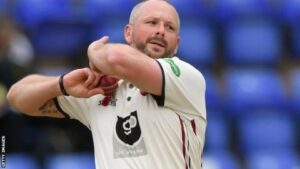
Stevo the bowler - much more than a dibbly-dobbler
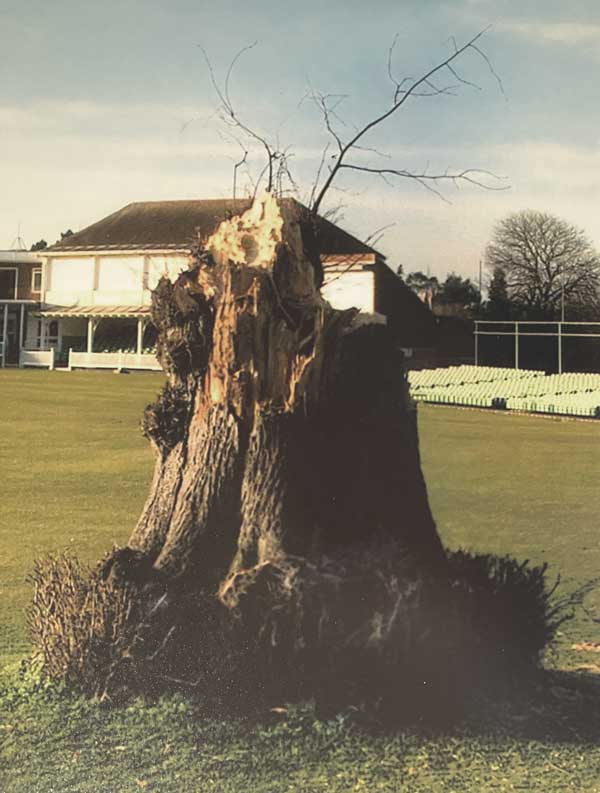
What was left of the Lime Tree
In 2005 also, a big change to the St Lawrence ground took place. The lime tree, which had stood since before Kent began playing at St. Lawrence, was blown down in a winter storm. The tree was known to be diseased, and there was concern that the tree might one day fall and injure somebody, but the committee was understandably reluctant to chop it down. The storm on 9 January 2005 solved the dilemma. The full story of the lime tree is recorded in David Robertson’s excellent book, A Legend Dies, a few copies of which are available in the club shop.
Several other fine players emerged during the first decade of the new century, people like James Tredwell, Amjad Khan, Geraint Jones, Martin Saggers and Sam Northeast, but the squad was not strong enough to win many trophies. A T20 Cup win in 2007, beating Gloucestershire in the final, was the only new pot in the trophy cabinet.
It was also the beginning of an era when professional cricketers moved from county to county much more. This had an effect on players’ earnings, because few were now likely to qualify for a benefit season if they only stayed a few years in any one county, which in turn created pressure on the salary budgets of the smaller counties. Kent were not going through a particularly wealthy time then (plus ça change!) so the committee decided to find radical new ways to secure the club’s finances. This involved selling off some of the land on the ground, building a hotel between the lime tree and the Old Dover Road, and selling the Kent v Lancashire 1906 painting, which was anyway currently displayed in the Lord’s pavilion, because the club could not afford the insurance. The plans caused an inevitable furore, but the stock market collapse of 2007/08 put paid to the plans for a hotel, and the club were forced to find another partner. Eventually they did, and Freeman House, a block of apartments, now stands where the hotel was once envisioned.
Rob Key played for Kent until 2015. By the time he retired he had scored more runs at Canterbury than any other Kent cricketer in history, and had also compiled the first double century for England by a Kent player. But perhaps he never quite did his talent justice. Brian Luckhurst once said, “If I’d had the talent that Rob has, I’d have played a hundred times for England.” Key played 15 times. He is now, at time of writing, managing director of England Cricket, and hugely influential within the national set-up. How his career will progress from here remains to be seen.
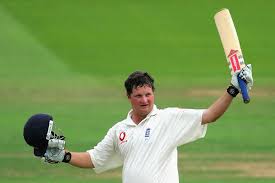
Rob Key hits a double century for England, 221 v West Indies at Lord's in 2004